
Understanding Sagittal Height
Sagittal height is an important measurement in the field of optics and eye care. It refers to the vertical distance from a reference point, usually the apex of the cornea or lens, to a specific chord across the eye’s surface. This measurement is crucial for determining Sagittal Height vs. Curvature the overall shape and profile of the cornea or contact lens surface. Sagittal height helps eye care professionals assess the fit and comfort of contact lenses by providing a detailed view of the eye’s topography beyond simple curvature measurements.
Exploring Curvature and Its Role
Curvature measures the radius of the cornea or lens surface, indicating how steep or flat the surface is at a given point. It’s typically expressed in millimeters or diopters and is used to describe the shape of the eye’s front surface. Curvature is a fundamental parameter used Eaglet Eye Surface Profiler in standard contact lens fitting and refractive assessments. However, curvature alone does not fully capture the complex geometry of the eye, especially for irregular or highly specialized lens designs. This is where additional metrics like sagittal height become valuable.
Why Both Metrics Matter for Lens Fitting
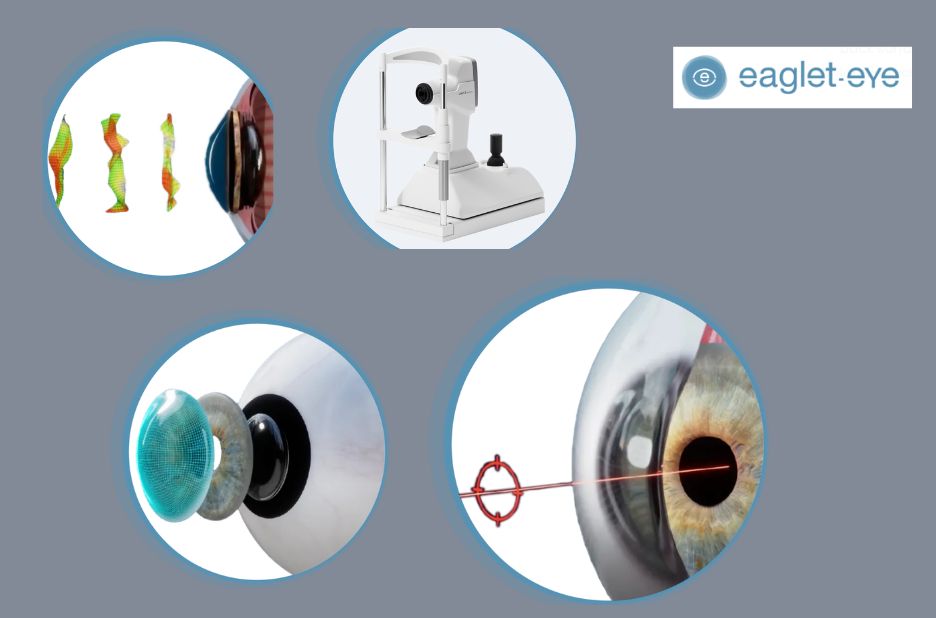
Comparing sagittal height vs. curvature reveals why these two measurements complement each other in clinical practice. While curvature provides a radius that reflects the steepness of the corneal surface, sagittal height offers a three-dimensional perspective by capturing the vertical dimensions relative to a chord. This combination allows practitioners to understand the true topology of the eye’s surface, leading to more accurate lens fitting decisions. Advanced tools like the Eaglet Eye Surface Profiler enable detailed analysis of these parameters, improving customization and patient comfort.
Conclusion
In conclusion, both sagittal height and curvature are essential for understanding eye geometry and achieving optimal contact lens fitting. While curvature gives a basic measure of steepness, sagittal height provides additional depth information crucial for complex or irregular eye shapes. Eaglet Eye B.V offers innovative solutions such as the Eaglet Eye Surface Profiler that deliver precise ocular data insights. These advancements help eye care professionals make better-informed decisions by accurately comparing sagittal height vs. curvature, ultimately enhancing lens performance and patient satisfaction.